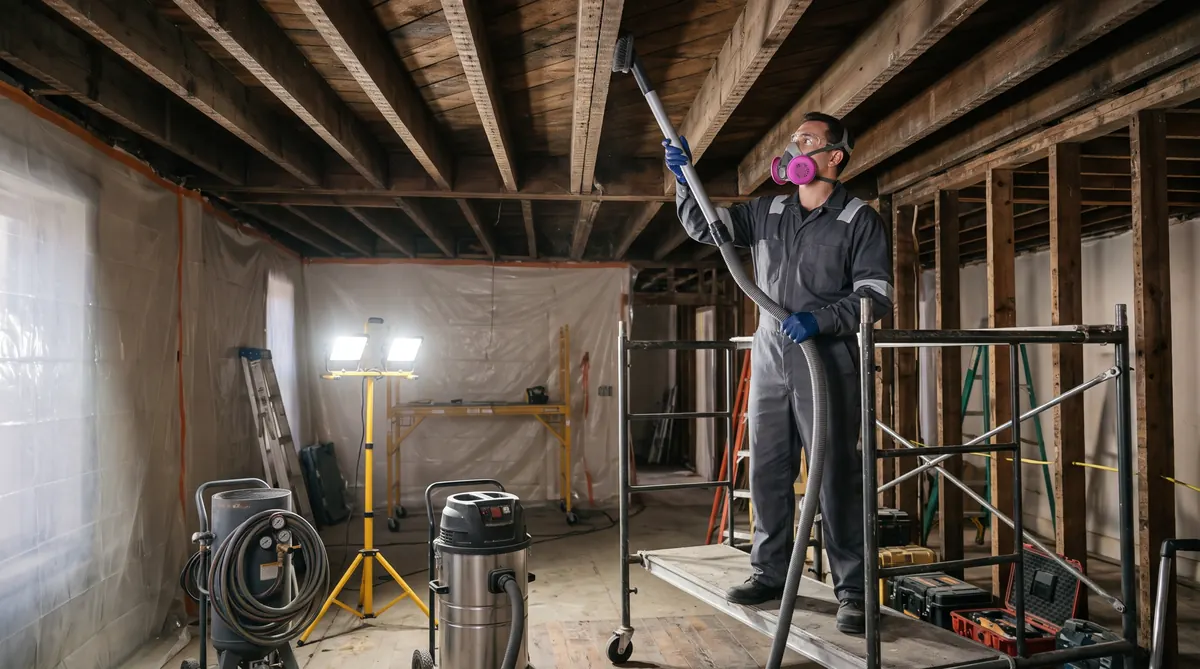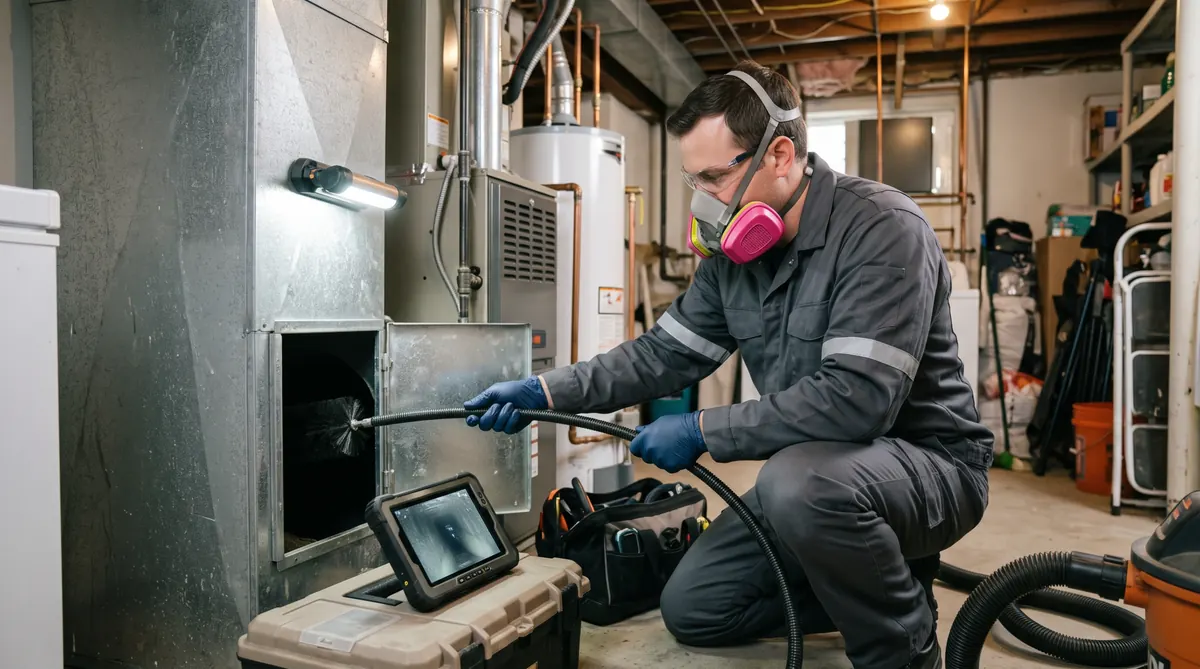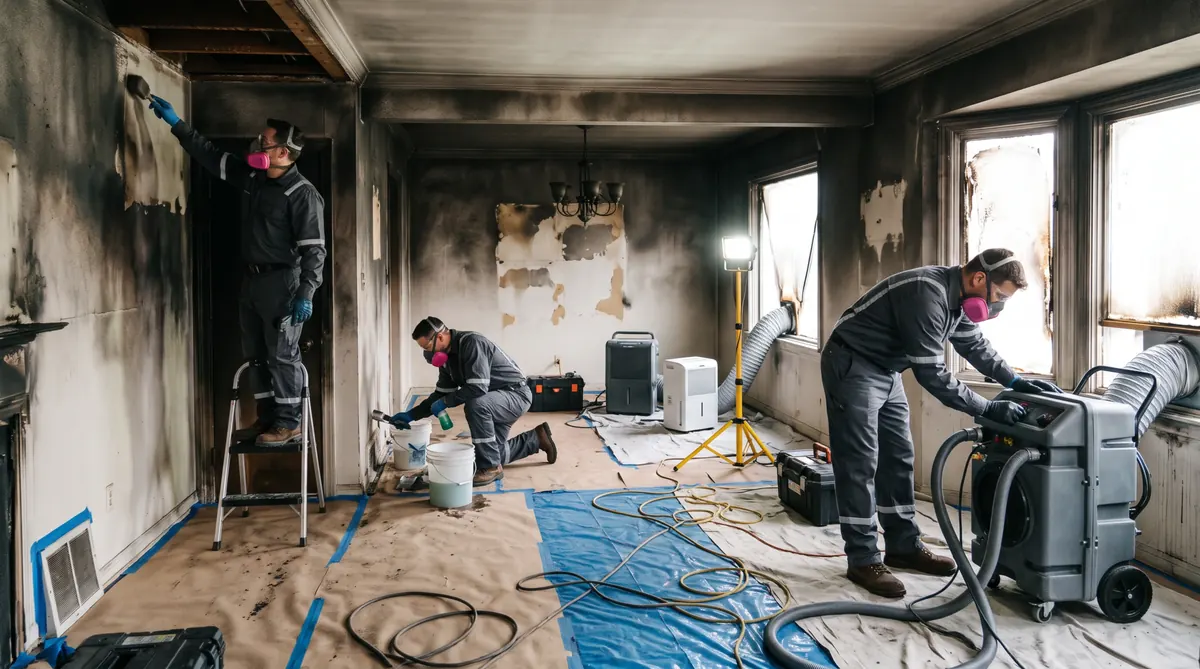
Burned plastics, treated lumber, batteries and household chemicals can leave residues beyond ordinary soot. Decontamination is a more rigorous cleaning process that aims to reduce those residues to safe levels before people return.
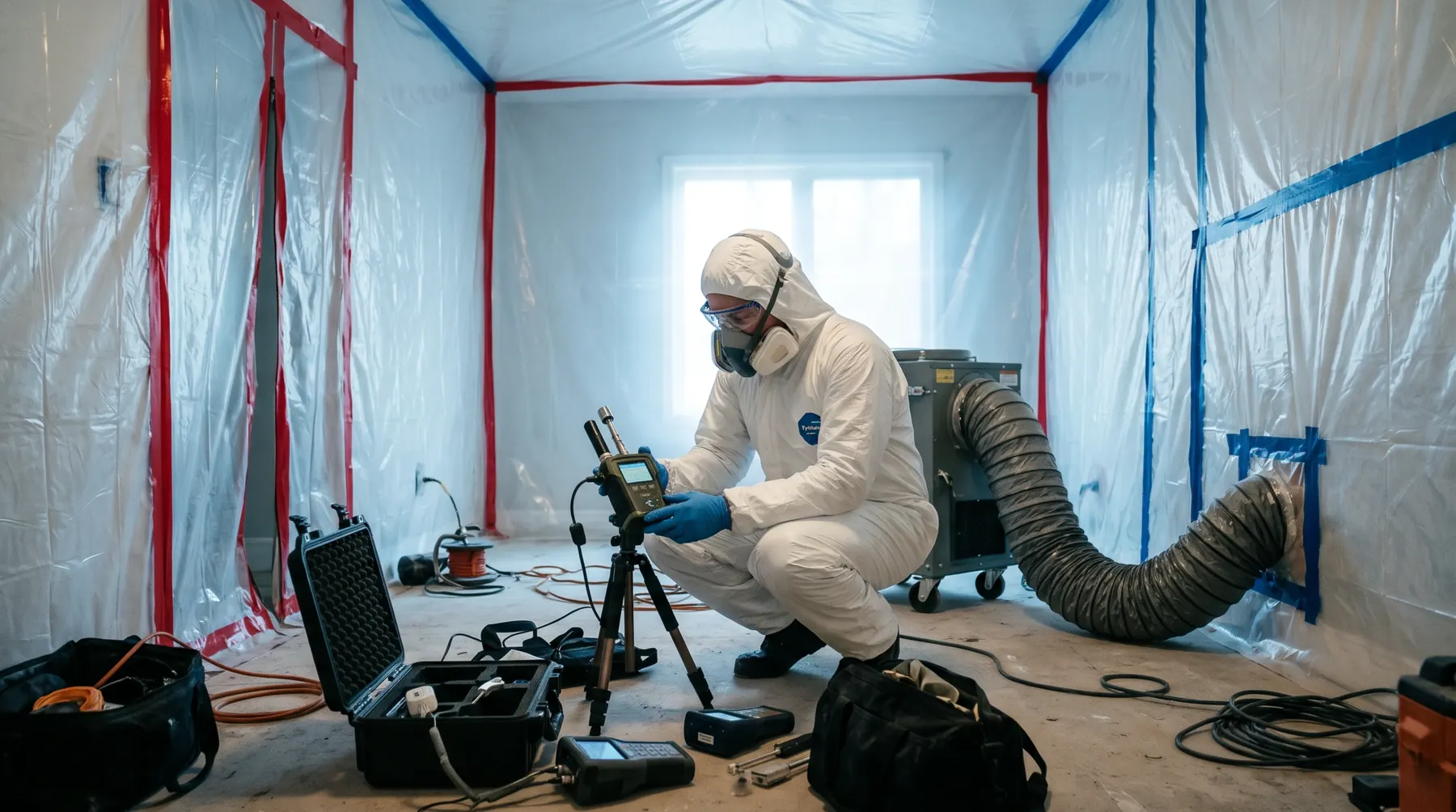
Providers use containment, HEPA filtration and detailed cleaning, and may recommend air or surface testing by an independent environmental professional.
When you need professional help
- Plastics, electrical or vehicle fires produced heavy smoke
- Chemicals or batteries were involved
- Someone in the household is sensitive to air quality
- Insurers or inspectors want clearance testing
- Visible residue remains after standard cleaning
How the post-fire decontamination process works
Assess hazards
Identify materials involved.
Contain
Isolate affected areas.
Decontaminate
Perform HEPA vacuuming and wet cleaning.
Filter
Run air scrubbers throughout.
Clear
Verify with testing where recommended.
Safety considerations
- Do not stay in the property until it is cleared
- Wear full protective equipment when working in affected areas
- Dispose of contaminated materials properly
Common questions
Is testing necessary?
Not always. It is often recommended for severe cases or when occupants are sensitive.
Who does the testing?
Ideally an independent environmental professional rather than the cleanup provider.
Information on this page is general. A licensed provider must inspect your property to recommend specific work. We are a referral service and do not perform the work ourselves.