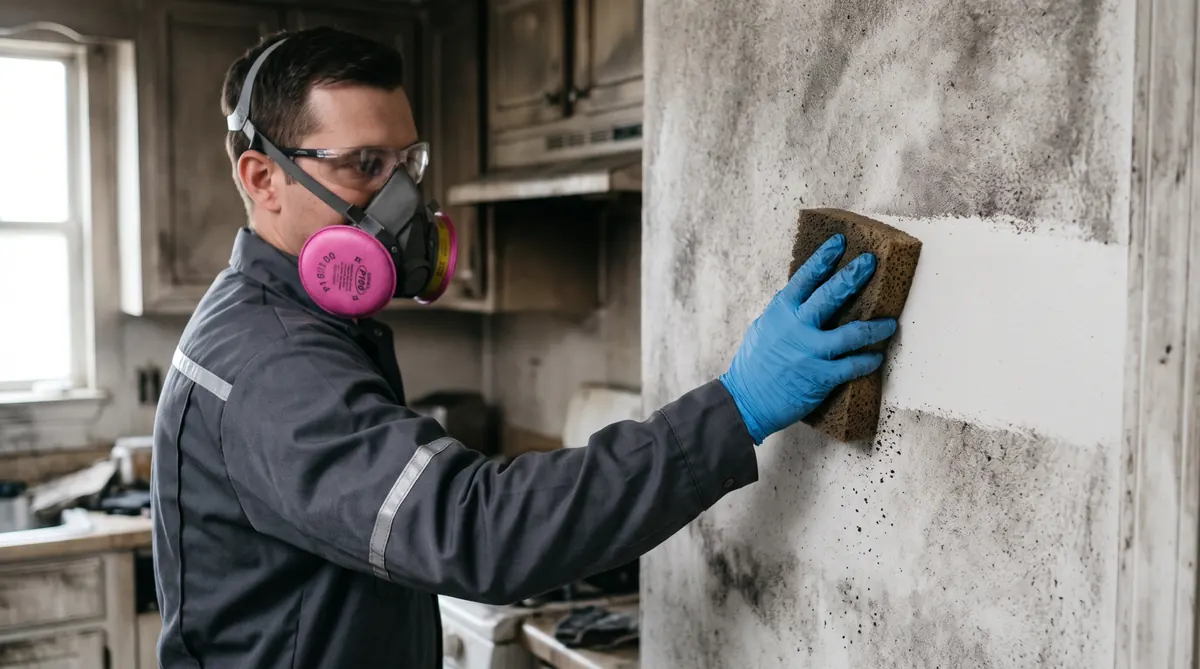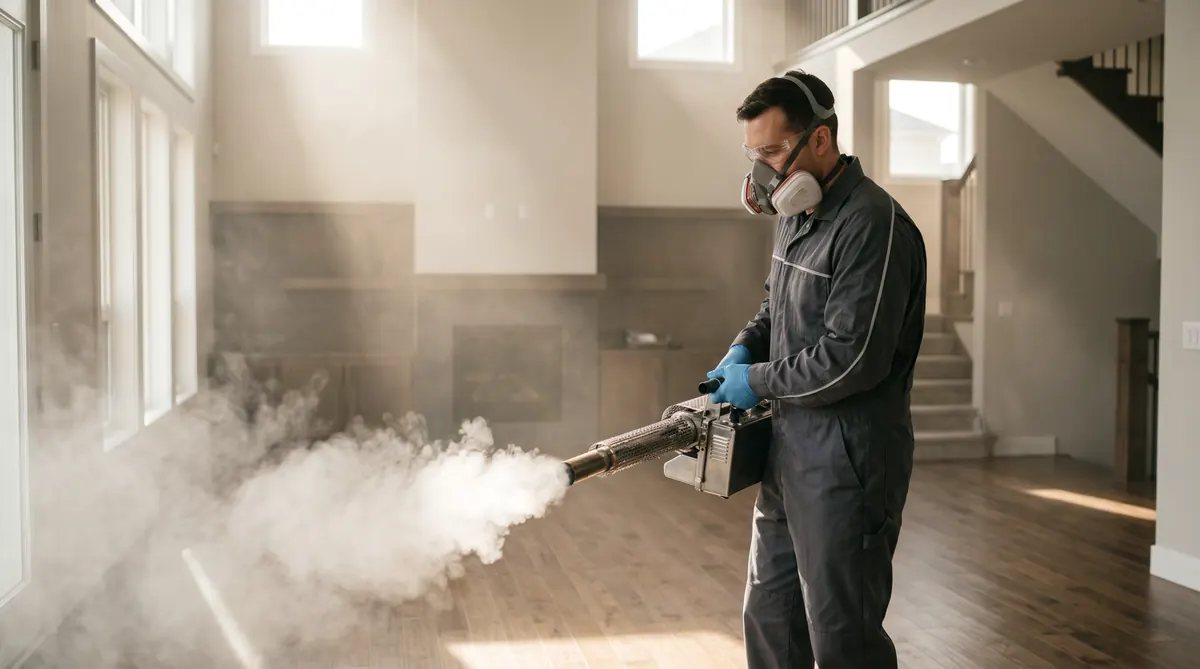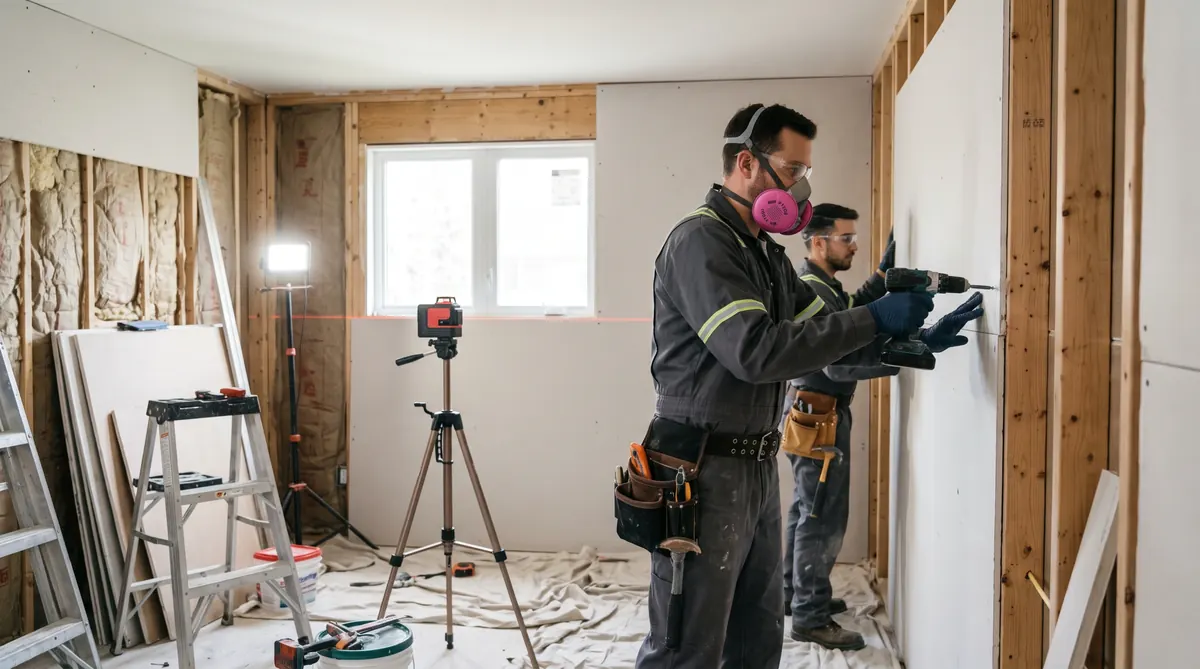
Paint alone does not stop smoke stains or odor. Residue can bleed through ordinary coatings and the smell can return in warm weather.
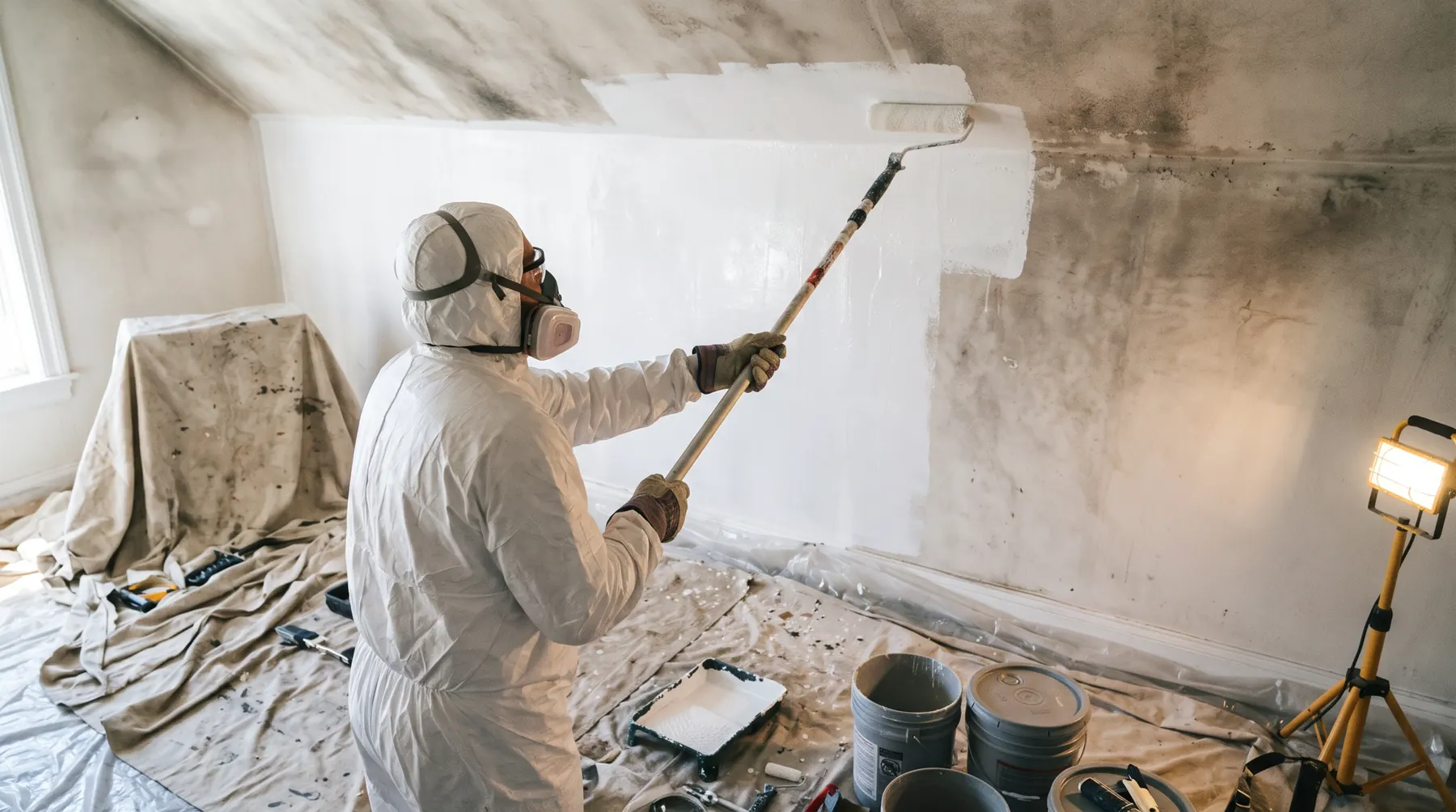
After cleaning, a stain-blocking sealant locks in what cannot be fully removed. It is a standard step before repainting walls, ceilings and trim.
When you need professional help
- Staining remains after cleaning
- Smoke odor persists in walls or ceilings
- You are preparing to repaint
- Wood trim or cabinets show discoloration
- Insulation or framing was left in place
How the soot sealant & paint prep process works
Clean first
Sealant works best on cleaned surfaces.
Test
Check adhesion and stain bleed on a patch.
Mask and protect
Cover floors, fixtures and openings.
Apply
Roll or spray the sealant with proper ventilation.
Cure and paint
Allow cure time, then finish.
Safety considerations
- Many sealants are solvent-based, so ventilate and keep occupants away
- Wear respiratory protection during application
- Follow cure times before moving belongings back
Common questions
Why not just paint?
Standard paint can let stains and odor show through. A sealant forms a barrier first.
How many coats?
It depends on the product and stain. Heavy stains may need two coats.
Information on this page is general. A licensed provider must inspect your property to recommend specific work. We are a referral service and do not perform the work ourselves.