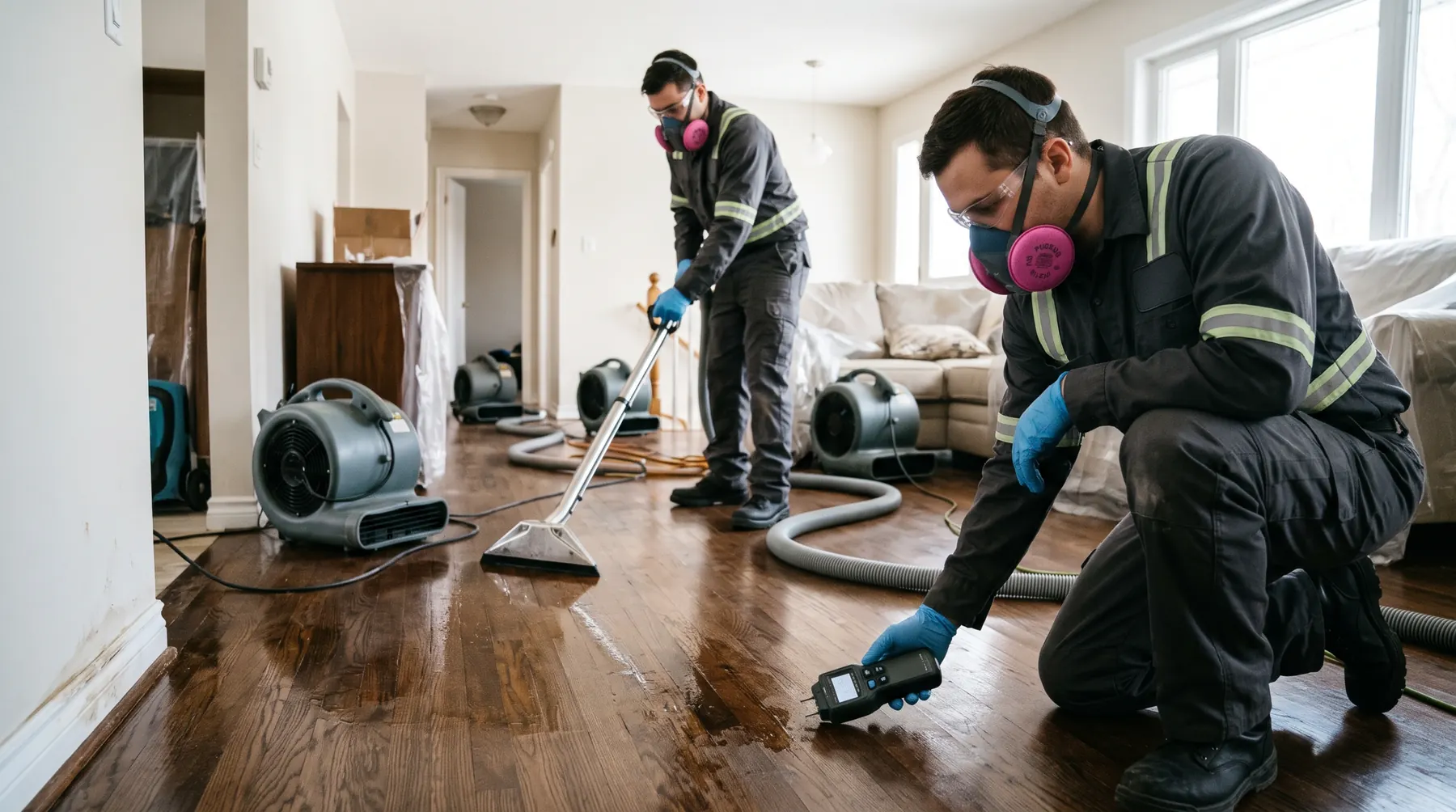
Putting out a fire takes a lot of water, and that water ends up in floors, walls, ceilings and the spaces beneath them. In a dry desert climate it is easy to assume things will dry on their own, but trapped moisture can still lead to swelling, warping and mold.
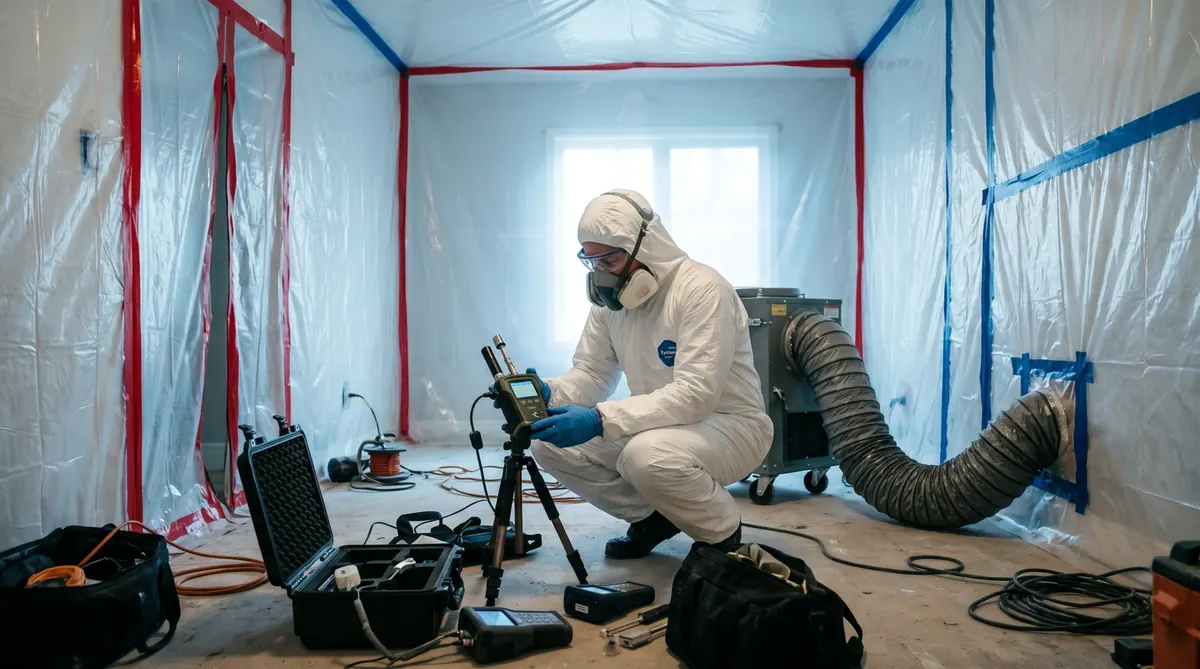
Providers measure moisture, extract standing water and use air movers and dehumidifiers to dry the structure, tracking progress with readings until materials reach acceptable levels.
When you need professional help
- Floors or carpets are wet or squishy
- Ceilings are sagging or stained
- Hoses or sprinklers ran inside the building
- Water reached an upper floor or crawlspace
- You smell mustiness a day or two after the fire
How the water damage cleanup process works
Stop the source
Make sure any broken lines or active sprinklers are shut off.
Extract
Remove standing water and wet debris.
Measure
Map moisture with meters and thermal imaging.
Dry
Place air movers and dehumidifiers and monitor daily.
Confirm
Take final readings and release the area for rebuilding.
Safety considerations
- Avoid walking on wet floors near electrical equipment
- Do not use household vacuums on water
- Water mixed with soot or sewage should be treated as contaminated
Common questions
How long does drying take?
Often three to five days, depending on materials and how much water was involved.
Can mold grow after a fire?
Yes, if materials stay damp. Fast extraction and drying are the best prevention.
Information on this page is general. A licensed provider must inspect your property to recommend specific work. We are a referral service and do not perform the work ourselves.