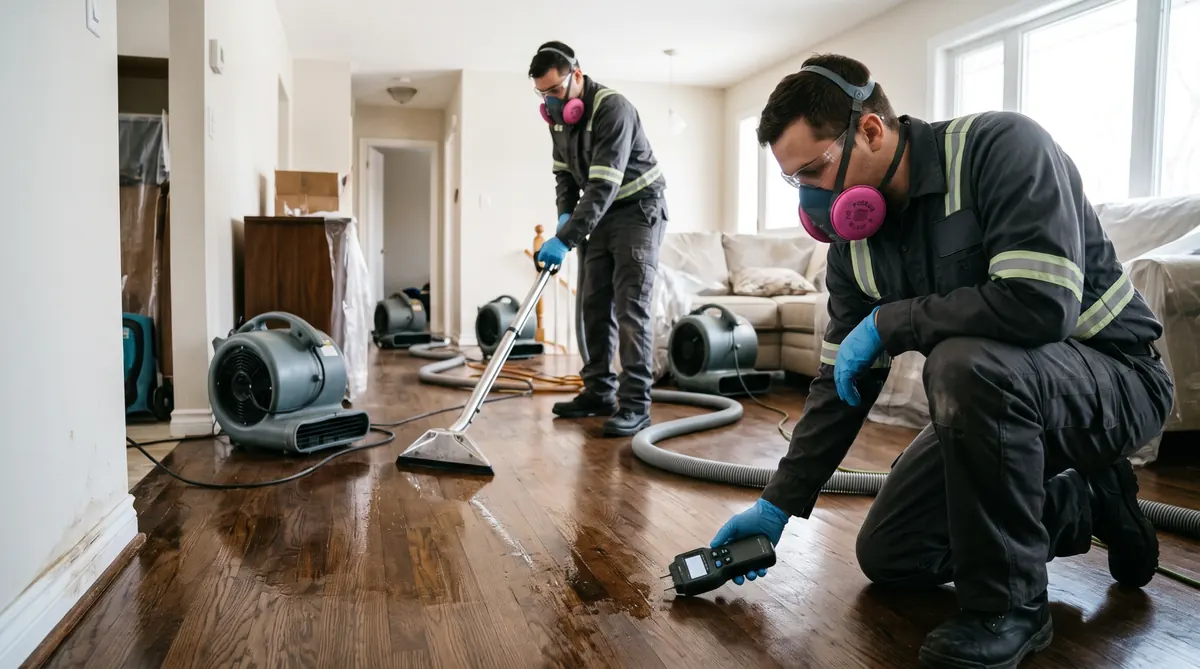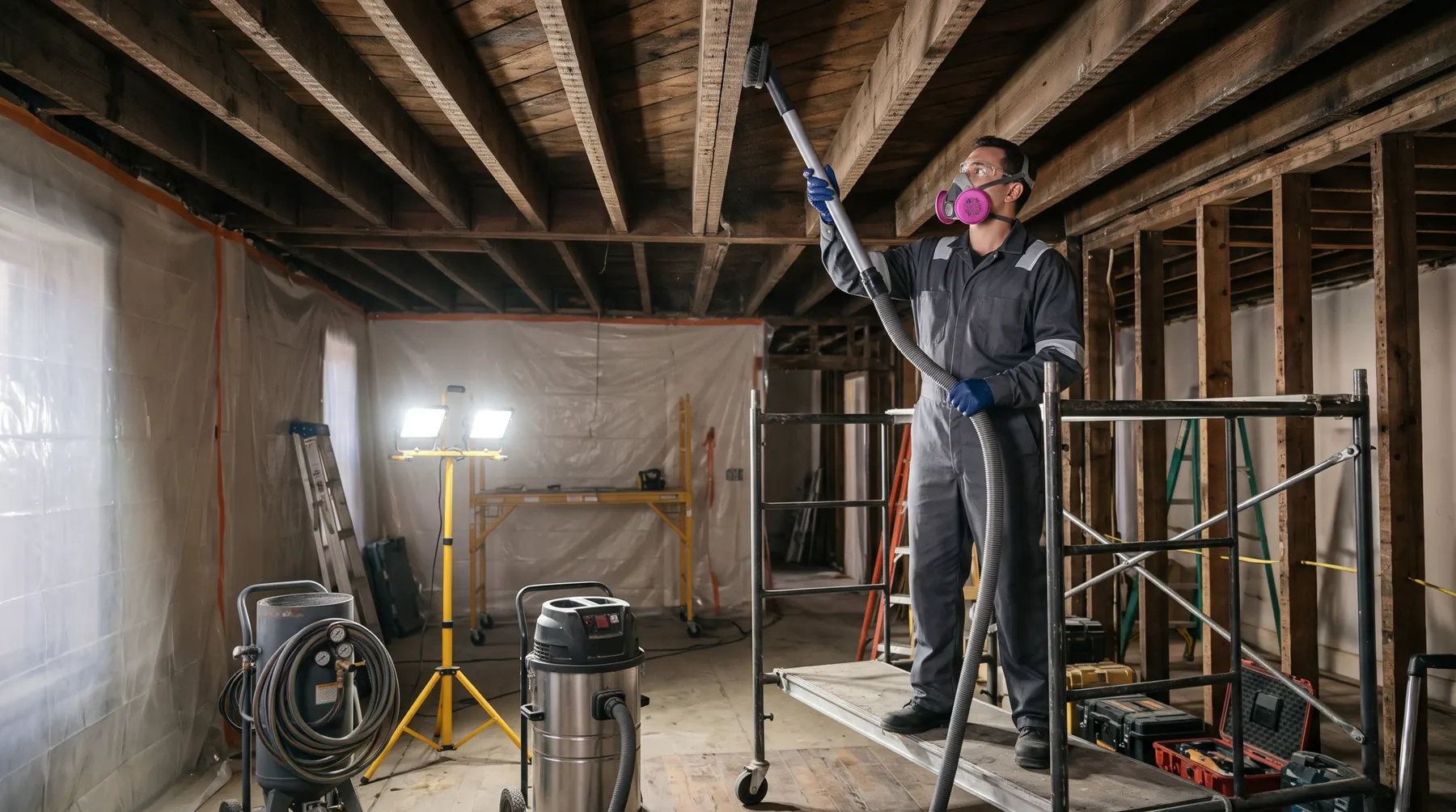
Even when flames never touched a framing member, heat and smoke can leave residue on studs, joists and sheathing. Rebuilding over that residue can trap odor behind new drywall.
Structural cleaning prepares the building shell. Depending on the material, providers may use HEPA vacuuming, dry ice or soda blasting, and sanitizing treatments after water exposure.
When you need professional help
- Charring or smoke staining on exposed framing
- Walls were opened for inspection or drying
- Wet insulation or drywall sat for more than a day or two
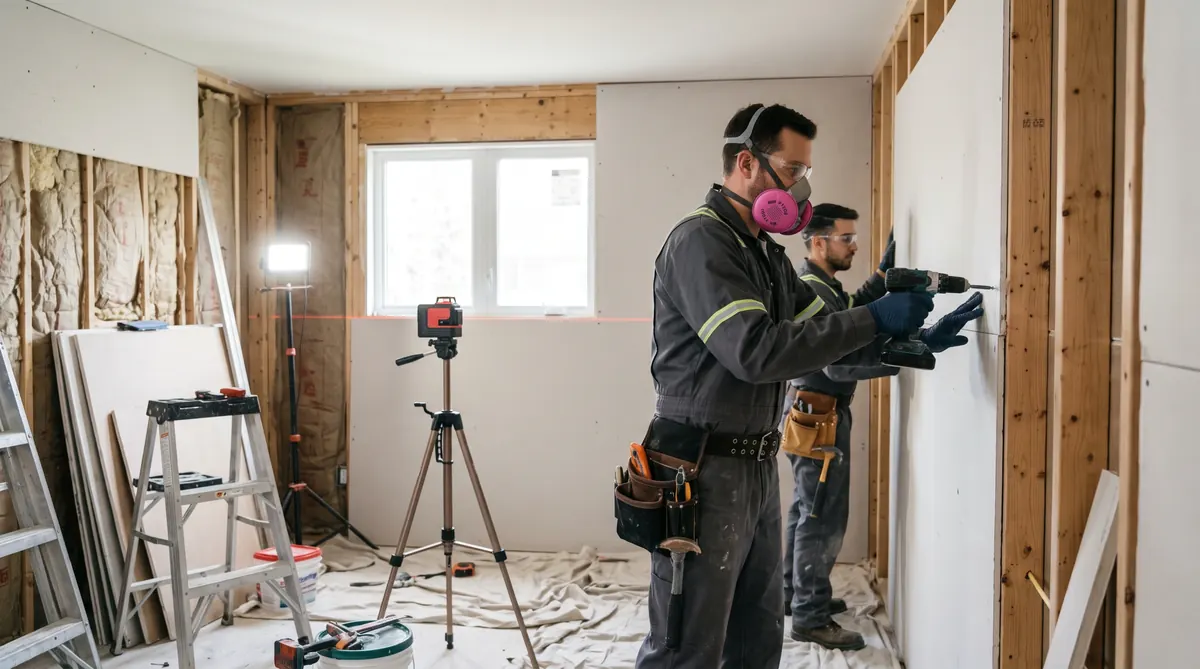
- You are about to start reconstruction
- An inspector or insurer has asked for documented cleaning
How the structural cleaning process works
Inspect framing
Check for char depth, heat damage and moisture.
Remove what cannot be saved
Cut out damaged insulation and finish materials.
Clean the structure
Use abrasive or dry methods suited to the wood or steel.
Sanitize
Treat surfaces exposed to contaminated water or heavy residue.
Document
Photograph and record the work for the claim file.
Safety considerations
- Older buildings may have asbestos or lead paint, so test before demolition or abrasive work
- A structural engineer should review significantly charred load-bearing members
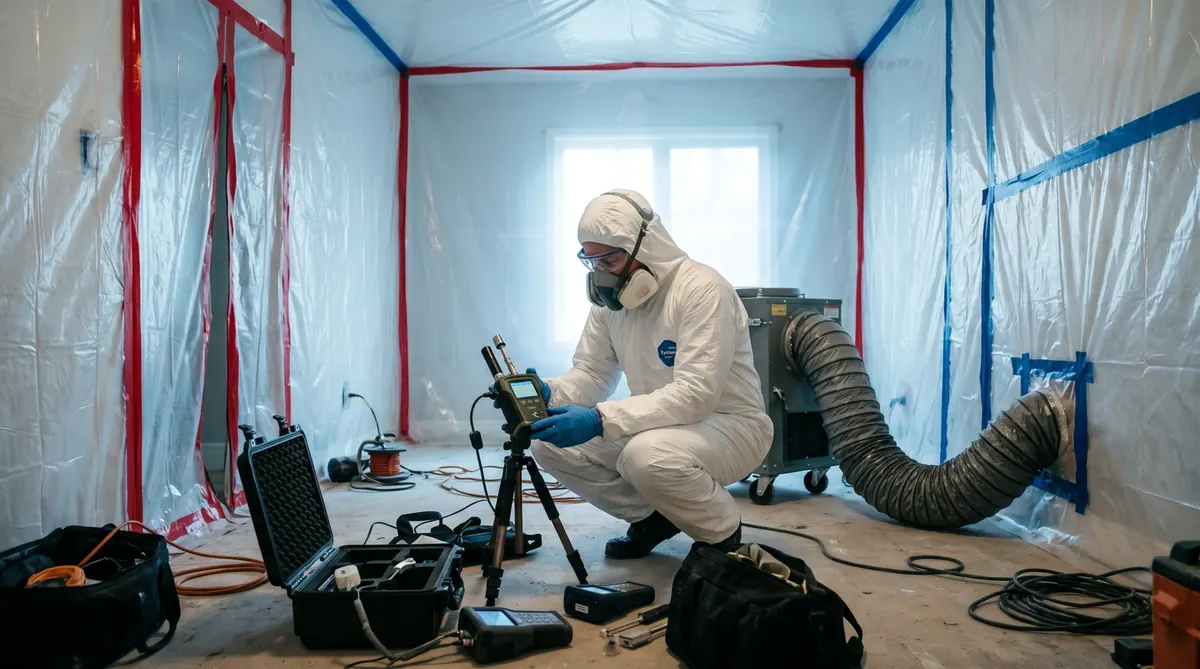
- Dust control and containment protect occupied areas
Common questions
Can charred wood be cleaned instead of replaced?
Light surface char can often be removed. Deep char that reduces the member's cross-section generally needs an engineer's opinion.
Why sanitize after a fire?
Firefighting water and soot can carry contaminants, and sanitizing helps prevent mold growth in damp cavities.
Information on this page is general. A licensed provider must inspect your property to recommend specific work. We are a referral service and do not perform the work ourselves.